







HIV.gov Mission and Team
Our Objectives
- This program, funded by the Minority HIV/AIDS Fund, provides timely, relevant information on the breadth of federal HIV policies, programs, and resources from across the U.S. government.
- To increase knowledge about HIV and access to HIV services for people with or experiencing risk for HIV.
HIV.gov receives planning guidance from the Federal HIV/AIDS Web Council (see below), a cross-agency planning group, and uses a communications plan to guide its activities.
Information Sharing
Unless otherwise noted, material presented on the HIV.gov website is considered federal government information and is in the public domain. That means this information may be freely copied and distributed. We request that you use appropriate attribution to HIV.gov.
Many checklists and other materials on this site are available in PDF format for ease of duplication. Note that if material is adapted or modified, all HIV.gov citations and logos must be removed. If copyrighted content, documents, images, or other materials appear on HIV.gov, it will be noted, and the copyright holder must be consulted before that material may be reproduced.
Website managers are encouraged to link to HIV.gov. Please identify the site as providing one-stop access to U.S. government HIV information.
HIV.gov to the People: Ensuring Up-to-Date Information
HIV.gov is deeply committed to staying informed on how the HIV service community addresses the needs of its members, serves communities, and assesses unmet needs. To achieve this, HIV.gov team members engage in a process where they visit service provider organizations to actively listen to providers, researchers, individuals with lived experiences, and administrators. This approach allows us to gain a better understanding of the profound impact of HIV in the community.
Planning
In early 2023, HIV.gov started exploring slowly and cautiously using generative Artificial Intelligence (AI) to develop social media, blog content, and videos using AI tools. All uses of AI are identified as developed by AI and reviewed by humans (HIV.gov team members). In addition, AI content is only ever used with a quality assurance review, as we would with any content product. Click here to learn more about the federal government’s investment in AI.
HIV.gov collaborates with departments and agencies across the federal government to provide HIV-related information to users. Content for this website is provided by:
- U.S. Department of Health and Human Services*
- Office of the Secretary
- Center for Faith-Based and Neighborhood Partnerships (CFBNP)
- Administration for Community Living (ACL) / Administration on Aging (AoA)
- Agency for Healthcare Research and Quality (AHRQ)
- Centers for Disease Control and Prevention (CDC)
- Centers for Medicare & Medicaid Services (CMS)
- Food and Drug Administration (FDA)
- Health Resources and Services Administration (HRSA)
- Indian Health Service (IHS)
- National Institutes of Health (NIH)
- National Cancer Institute (NCI)
- National Institute of Allergy and Infectious Diseases (NIAID)
- National Institute on Drug Abuse (NIDA)
- Office of AIDS Research (OAR)
- Office for Civil Rights (OCR)
- Office of Global Affairs (OGA)
- Office of the Assistant Secretary for Health (OASH)
- Office of Disease Prevention and Heath Promotion (ODPHP)
- Office of Infectious Disease and HIV/AIDS Policy (OIDP)
- Presidential Advisory Council on HIV/AIDS (PACHA)
- Office of Minority Health (OMH)
- Office of Population Affairs (OPA)
- Office of the Surgeon General (OSG)
- Office on Women’s Health (OWH)
- Regional Health Administrators
- Office of the Assistant Secretary for Public Affairs (ASPA)
- Digital Communications Division
- Substance Abuse and Mental Health Services Administration (SAMHSA)
- Office of the Secretary
- U.S. Department of Housing and Urban Development (HUD)
- Office of HIV/AIDS Housing
- U.S. Department of Justice (DOJ)
- Civil Rights Division (CRD)
- U.S. Department of Labor (DOL)
- Office of Disability Employment Policy (ODEP)
- U.S. Department of State
- Office of the Global AIDS Coordinator / The United States President’s Emergency Plan for AIDS Relief (PEPFAR)
- U.S. Agency for International Development (USAID)
- U.S. Department of Veterans Affairs (VA)
- Social Security Administration (SSA)
*The U.S. Department of Health and Human Services (HHS) is the United States Government's principal agency for protecting the health of all Americans. HHS is the managing sponsor of HIV.gov.
HIV.gov Team

Miguel Gomez
Director, HIV.gov, and Senior Communications Advisor
Office of Infectious Disease and HIV/AIDS Policy, U.S. Department of Health and Human Services
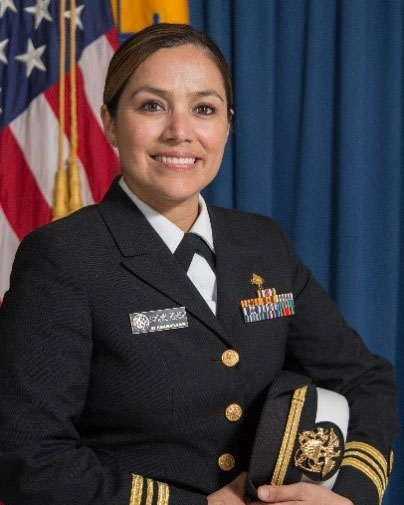
Michelle Sandoval-Rosario, DrPH, MPH (CDR USPHS)
Deputy Director, HIV.gov and Senior Program Lead for America’s HIV Epidemic Analysis Dashboard (AHEAD)
Director, Prevention through Active Community Engagement (PACE) – HHS Region 9
Office of Infectious Disease and HIV/AIDS Policy, U.S. Department of Health and Human Services
Federal HIV/AIDS Web Council
For over 18 years, HIV.gov, formerly AIDS.gov, has brought together HIV program representatives from over 35 federal partner agencies that serve as members of the Federal HIV Web Council (FHWC). The Council brings together web, content/program, and communications leads from federal agencies that have HIV portfolios. Council members plan and implement federal communications efforts related to HIV. The Council also promotes coordination and collaboration to improve the delivery of HIV prevention, testing, and treatment messages and services via a variety of communications channels, including social media. The Council leads coordination for significant events affecting the HIV community, including nationally- and federally- recognized observances and events and national and international conferences.
The Federal HIV Web Council is coordinated by Miguel Gomez, Director of HIV.gov, and Michelle Graham, FHWC Liaison. The Council meets virtually every month. Subsets of the Council meet separately to collaborate on special events and activities. Read our HIV.gov blog to learn more about the work of our members.
Content Criteria and Notices
Health Observances and Awareness Days
HIV.gov does not create or sponsor any HIV awareness days. However, we offer information on a number of events and observances that promote awareness about HIV and related conditions.
We also work with our colleagues across the U.S. government to coordinate and cross-promote federal activities for National HIV Testing Day (June 27) and World AIDS Day (December 1).
We encourage everyone involved in health observances to assess what your stakeholders want and to evaluate your efforts to maximize reach and impact.
Information or links to awareness day resources appearing on HIV.gov are provided as a service to our visitors and do not represent endorsement by HIV.gov or the U.S. Department of Health and Human Services.
HIV.gov History
These are a few of the milestones in the history of HIV.gov.
2024
- Supported communications efforts for the HHS Office for the Assistant Secretary of Health (OASH) National Syphilis and Congenital Syphilis Syndemic Federal Task Force.
2023
- Updated the HIV Services Locator to include information on condom distribution sites, PEP services, mpox vaccination, and access to free HIV mail-in self tests.
- Launched the enhanced America’s HIV Epidemic Analysis Dashboard (AHEAD), driven by a commitment to enhancing user experience and data availability for diverse members of the HIV community. AHEAD is a tool that tracks the six EHE indicators in areas with the highest burden of HIV and can be used to explore other HIV data sources.
- Supported the development and release of the National HIV/AIDS Strategy 2023 Interim Action Report, detailing high-level updates on dozens of key actions taken by federal partners during FY22 and FY23 to move the nation closer to reaching the four goals laid out in the Strategy.
- Released Spanish-language HIV Basics and Federal Response content on HIV.gov, reaching Hispanic/Latino people with culturally and linguistically appropriate messages about HIV testing, prevention, and treatment.
- Integrated the HIV Services Locator into the HIV.gov chatbot.
2022
- Launched re-designed HIV.gov as a Progressive Web Application (PWA) for faster performance and smoother user experience. Users can also locally favorite blog posts.
- Supported the federal response to the mpox outbreak, sharing information with followers due to the disproportionate impact on people with and at risk for HIV
- Supported the launch of the Office of Infectious Disease and HIV/AIDS Policy’s “I am a Work of ART” viral suppression campaign and the Spanish-language version, “Celebro mi salud.”
- Supported communications efforts for the White House’s release of the National HIV/AIDS Strategy Federal Implementation Plan, documenting federal agencies’ commitments to programs, policies, research, and activities during fiscal years (FY) 2022–2025 to meet the Strategy’s goals.
2021
- Supported communications efforts for the White House’s release of the National HIV/AIDS Strategy (2022-2025) and launched a web page about the new Strategy
- Updated the HIV Services Locator search screen functionality to allow users to select specific HIV services prior to entering location information. This update, based on analyzing web metrics and usability testing, resulted in an increase in page views by 128%, an increase in average time spent on map by 895%
- Launched an HIV.gov chatbot prototype, built with machine learning for its natural language processing, allowing users to ask questions about HIV in a conversational format
- Implemented Google 4, the next generation of Google Analytics for the HIV.gov website
2020
- Launched ClinicalInfo.hiv.gov in collaboration with NIH’s Office of AIDS Research, migrating content from the former AIDSinfo.nih.gov to provide access to the latest federally approved HIV/AIDS clinical treatment and prevention guidelines, as well as other HIV research information for health care providers, researchers, people affected by HIV, and the general public
- Launched America’s HIV Epidemic Analysis Dashboard (AHEAD) to support monitoring progress toward Ending the HIV Epidemic (EHE) initiative goals and visualizing national and jurisdictional progress towards meeting 2025 and 2030 targets for each EHE indicator
- Launched new page to provide information about the intersection between COVID-19 and HIV, with links to relevant federal information resources
- Added womenshealth.gov and girlshealth.gov to HIV.gov’s hosting environment
- Reached more than 10,000 followers on Instagram
2019
- HIV.gov added content to support the Ending the HIV Epidemic: A Plan for America initiative, announced during the State of the Union address.
- In March, Vaccines.gov was added to HIV.gov’s hosting environment.
- In June, Locator.HIV.gov was redesigned and launched as a progressive web app (PWA) to provide an enhanced user experience to those seeking HIV-related services.
- For World AIDS Day, HIV.gov partnered with Snapchat’s News Division again.
2018
- HIV.gov added structured data to all of its blog posts using Google Tag Manager.
- In June, Locator.HIV.gov was one of the top 20 federal sites visited.
- On January 11, 2018, all HIV.gov digital products were upgraded to HTTP/2 protocol.
2017
- HIV.gov partnered with Snapchat's News Division to produce a nationwide Snapchat Story in recognition of World AIDS Day, which reached more than 1 million viewers.
- HIV.gov obtained its Authority To Operate (ATO) on May 31, 2017.
- In June 2017 AIDS.gov changed its name to HIV.gov and launched a new Drupal-based site that integrated the formerly separate website and blog.
2016
- Implemented forward secrecy and HSTS (HTTP Strict Transport Security) across all AIDS.gov domains
- Earned A+ rating via SSL Labs Server Test
- Made our debut on Facebook Live from the 2016 International AIDS Conference (AIDS 2016) from Durban, South Africa
- HIV.gov’s PositiveSpin digital storytelling initiative was nominated for a Webby Award for Government and Civil Innovation Websites and Mobile Sites
2015
- Reached more than 300,000 followers on Twitter
- Launched the Positive Spin digital storytelling initiative
- Led communications support for the release of the National HIV/AIDS Strategy: Updated to 2020
2014
- Began working to develop a digital strategy for HHS
- Launched Virtual Office Hours
- Served as the U.S. government’s communications vehicle at the 2014 International AIDS Conference in Melbourne, Australia
- Migrated all AIDS.gov domains to HTTPS by default
- Began using Instagram
- Launched the Black Voices blog series
2013
- Began working to support implementation of the Affordable Care Act
- Developed national technical assistance new media tools to support the roll-out of the White House’s HIV Care Continuum Initiative
2012
- Established the national New Media Declaration at the 2012 International AIDS Conference
- Worked with the White House and OMB to develop the Federal Digital Government Strategy
- Redesigned the AIDS.gov site using responsive design
- Began working with the GSA to educate federal staff on responding to changes in the ways consumers access information on public health programs
2011
- Launched Facing AIDS, first responsive website
- Expanded our work to address viral hepatitis
- Began broadcasting video updates from the annual Conference on Retroviruses and Opportunistic Infections (CROI)
2010
- Launched the cross-agency HIV Testing Sites & Care Services Locator
- Began broadcasting video updates from the biennial International AIDS Conference on behalf of the U.S. government
- Led communications efforts for the White House’s release of the National HIV/AIDS Strategy
- Launched the federal webpages for the Strategy
- Designated as vehicle for transparency for the Strategy by the White House
- Began working with leaders in the community of black men who have sex with men (BMSM) to use new media to address rising HIV incidence rates
2009
- Inaugurated the Federal HIV/AIDS Web Council to bring together web, content, and communications leads from federal agencies to promote new media planning, coordination, and cross-agency collaboration to increase the reach and effectiveness of HIV-related messages and services
- Offered our first social media lab at the CDC’s National HIV Prevention Conference
2008
- Launched the AIDS.gov blog to provide information on using new media to extend the reach of federal HIV/AIDS messaging—with an emphasis on meeting the information needs of communities of color
- Began using Twitter
- Held first technical assistance session on new media tools for national HIV organization partners
2007
- Developed the U.S. government’s first cross-agency podcast workgroup
- Began using Facebook to highlight federal resources for those reaching and serving communities of color
- Held first technical assistance session on new media tools for senior federal leadership
2006
- In partnership with the White House, held the first meetings of the AIDS.gov Planning Workgroup to plan the launch of AIDS.gov—bringing together federal HIV, technology, and communications leadership for the first time
- Launched the program at an historic AIDS.gov-sponsored World AIDS Day gathering of African American and other southern minority community leaders in Memphis, TN
2005
- Secured permission from the White House to launch AIDS.gov